
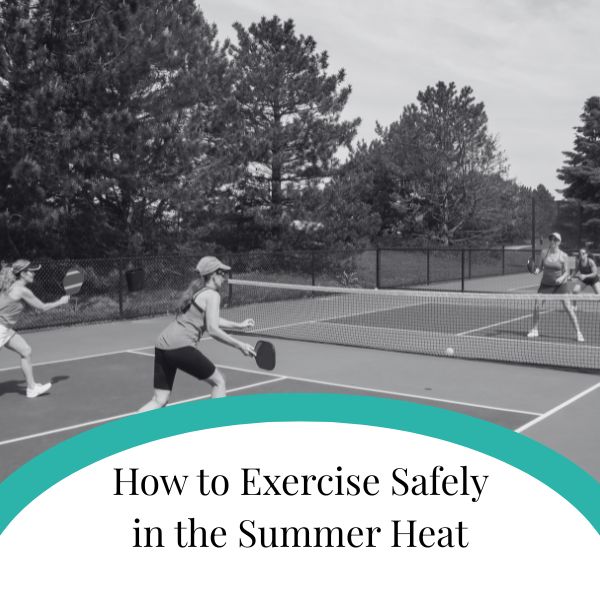
As the weather heats up, many people head indoors to work out — or skip their workouts altogether. After being cooped up all winter, it’s tempting to take that run or bike ride outside. But as the temperature climbs, outdoor exercise can quickly become too much. Overheating can lead to muscle cramps, exhaustion, and, in serious cases, heat stroke — a genuine medical emergency. The good news is that with a few smart adjustments, you can keep moving all summer without letting the heat get the best of you.
Hydrate — Before You’re Thirsty
The single most important thing you can do is stay hydrated. By the time you feel thirsty, you’re already a little dehydrated, so don’t wait for that signal. Drink water before you head out, sip regularly while you exercise, and keep drinking afterward. For longer or more intense sessions — anything over about an hour — a sports drink can help replace the electrolytes you lose through sweat. Keep in mind that high humidity makes things riskier: when the air is already saturated with moisture, your sweat can’t evaporate and cool you as effectively, so check the heat index, not just the temperature, before you go.
Beat the Sun: Time Your Workouts
Instead of exercising in the middle of the day, try getting out early. It’s always cooler as the sun is rising, making dawn a great time for a run or ride. If you don’t mind the dark, after sunset works too — just wear reflective clothing so drivers and cyclists can see you. Either way, aim to avoid the hottest stretch of the day, roughly 10 a.m. to 4 p.m., when the sun is most intense.
Dress for the Heat
What you wear matters more than people think. Choose loose, lightweight, light-colored clothing that lets your skin breathe and reflects the sun rather than absorbing it. Add a wide-brimmed hat or visor, sunglasses, and a broad-spectrum sunscreen to protect against sunburn, which itself makes it harder for your body to cool down.
Ease Into It
Your body actually adapts to exercising in the heat, but that acclimatization takes days, not hours. If you haven’t been active outdoors in a while, don’t try to pick up right where you left off in the spring. Start with shorter, lower-intensity sessions and build back up gradually over a week or so, taking frequent breaks in the shade. Pushing too hard too soon is one of the most common ways people end up overheated.
Take to the Water
One of the best ways to beat the heat is to exercise right in it. Pools, lakes, and the ocean let you get a great workout while staying cool. Swimming laps gets your heart pumping and builds muscle tone with almost no joint impact, which is why it’s a favorite for anyone recovering from an injury. You can also try water aerobics, paddleboarding, surfing, or simply walking laps in the shallow end.
Switch Up the Scenery
Sometimes it’s just too hot to be outside — but that doesn’t mean you’re stuck at the gym. A shopping mall offers a cool, climate-controlled space that’s perfect for walking. Put on comfortable shoes and do a few laps up and down the concourse; you’ll get your steps in and stay cool while you window shop. And if a warm summer rain rolls through, a workout in the rain can be a refreshing way to cool off — just head indoors immediately at the first sign of thunder or lightning.
Know the Warning Signs
Even with the best planning, it’s important to recognize when your body is overheating. Heat exhaustion is the earlier stage, and its signs include heavy sweating, muscle cramps, dizziness, headache, nausea, fatigue, and a rapid pulse. If you notice these, stop, get to a cool or shaded place, loosen your clothing, and drink water. Symptoms usually ease within about half an hour of resting and cooling down.
Heat stroke is a life-threatening emergency and requires immediate action. Warning signs include a body temperature at or above 104°F, confusion or slurred speech, fainting, a rapid heartbeat, and — notably — hot, dry skin as the body stops sweating. If you or someone else shows these signs, call 911 right away and work to cool the person down while you wait for help.
Certain groups need extra caution in the heat, including young children, older adults, and anyone with heart conditions or taking medications like diuretics, beta-blockers, or antihistamines, which can affect the body’s ability to regulate temperature.
Enjoy the Season — Safely
However you choose to stay active this summer, don’t let the heat get the best of you. Warmer weather is a great excuse to switch up your routine and try something new. And if the heat leaves you with a nagging muscle strain or you’re not sure what activity is right for your body, talk to your physical therapist at Advance Physical Therapy about the safest ways to keep moving all summer long.




No comment