
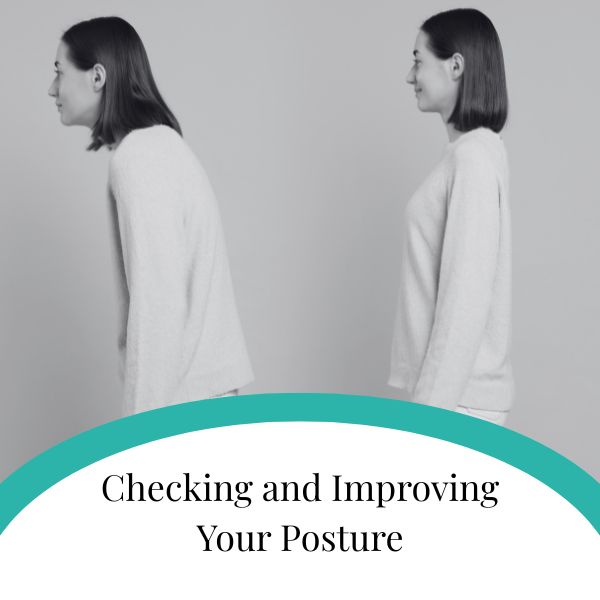
Posture might sit near the bottom of your health to-do list, but it’s one of the easier things to work on — and small, consistent adjustments can make a real difference in how you feel. Spending long stretches slouched or hunched over a screen can contribute to shoulder tension, neck stiffness and strain, and lower back discomfort over time. The good news is that improving your posture doesn’t require much effort, and it starts with a shift in how you think about it.
What “Good Posture” Really Means
Good posture is often described as maintaining the natural curves of your spine — with your neck, mid-back, and lower back balanced and aligned. That’s a useful starting point, but here’s the part most people miss: there is no single “perfect” posture you need to lock into all day. Research hasn’t found one ideal position that prevents pain, and even a textbook-perfect posture becomes uncomfortable if you hold it for hours. Your body is built to move.
That’s why the most helpful mantra is simply this: your best posture is your next posture. The real problem usually isn’t the position you’re in — it’s staying in any one position for too long. Keeping that in mind takes the pressure off “sitting up perfectly” and puts the focus where it belongs: on moving and changing things up regularly.
How to Check Your Posture
A quick self-check can highlight the areas worth paying attention to. Stand in front of a mirror and ask yourself:
- Are your hips level?
- Is your head held straight, not jutting forward?
- Are your shoulders roughly in line with your ears?
- Are your shoulders level with each other?
- Is your chin parallel to the floor?
For a simple standing check, try the wall test: stand with your heels, buttocks, upper back, and the back of your head lightly touching a wall. You should be able to slide a flat hand into the small gap behind your lower back. Big gaps or areas that can’t comfortably reach the wall point to spots where a little attention could help.
Habits to Support Your Posture Through the Day
Once you know where you tend to drift, a few simple habits — at work, in the car, or at home — go a long way:
- Move often. This is the big one. Change positions and take short movement breaks every 30 to 60 minutes during any prolonged activity. Stand up, roll your shoulders, turn your head, walk to refill your water — brief movement resets your body far more than holding still ever could.
- Set up your workspace well. Position your monitor about an arm’s length away with the top third at eye level, keep your feet flat on the floor with hips slightly higher than your knees, and use a chair with lumbar support (or a small rolled towel) to maintain your lower back’s natural curve.
- Alternate sitting and standing. If you have a sit-stand desk, use it — but don’t stand all day either. The benefit comes from switching between the two.
- When seated, gently lift your chest and let your shoulders settle back and down, without stiffening into it.
- In the car, keep your seat supportive and fairly upright so your hips sit at roughly a 90-degree angle, with a comfortable reach to the wheel.
- When standing, distribute your weight evenly across both feet rather than leaning onto one hip.
- Choose supportive footwear over very high heels, which shift your alignment forward.
- Set up sleep for comfort. On your back, use a pillow that keeps your head and neck neutral (not propped too high); if you sleep on your side, a pillow between your knees helps keep your spine aligned.
- Build some strength. Gentle core and upper-back exercises make it easier to hold a comfortable posture without effort, since strong supporting muscles do the work for you.
When to Get Help
If neck, shoulder, or back discomfort lingers despite these adjustments, it’s worth having it looked at. A physical therapist can assess how you move, pinpoint the muscle imbalances or weaknesses behind your discomfort, and design a simple strengthening and mobility plan tailored to you. If you’d like that kind of personalized guidance, the team at Advance Physical Therapy is here to help.
No comment