Do you ever feel like you’re not standing up straight? Does one shoulder sit lower than the other? Signs like these can point to scoliosis. Our team at Advance Physical Therapy in Williamsville, NY is here to help you understand your condition and get the care that’s right for you. With five convenient locations, we’re easy to reach no matter where you live.
What Is Scoliosis?
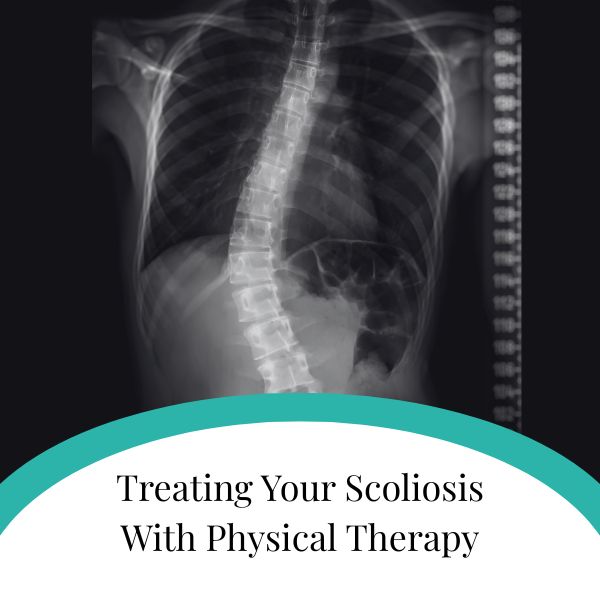
Scoliosis is a sideways curve of the spine, often shaped like an “S” or a “C,” that can keep you from standing fully upright. In its early stages it’s frequently painless — which is part of why it can go unnoticed for a while. Over time, though, a more significant curve can place stress on the surrounding spinal discs, nerves, joints, muscles, and ligaments, and that stress can lead to discomfort or back pain, particularly in adults.
The most common form is adolescent idiopathic scoliosis, meaning it appears during the growth years and has no known single cause. It tends to emerge or worsen during the adolescent growth spurt, and it’s considerably more common in girls, who are also more likely to see their curves progress. Overall, scoliosis is estimated to affect about 2–3% of people. It won’t affect everyone the same way, but if it’s affecting you, it’s worth having evaluated. Learn more about scoliosis and its causes.
Signs of Scoliosis
Because scoliosis often doesn’t hurt at first, it’s usually spotted by visible changes in the body’s alignment. Common signs include:
- Uneven shoulders
- One shoulder blade that appears more prominent than the other
- An uneven waistline
- One hip sitting higher than the other
- The head not centered directly over the body
- Clothing that hangs unevenly
- Uneven ribs or a visible “hump” on one side when bending forward at the waist
That last one is the basis of a simple screening check often used in schools and clinics: bending forward at the waist makes a curve and any associated rib prominence easier to see.
What Are the Treatment Options?
The right approach depends largely on the size of the curve and how much growing a person has left to do. Early detection is the single most important factor, because catching a curve before it progresses gives the most options.
Observation. Most children with a mild curve don’t need active treatment right away. Instead, a doctor monitors the spine every four to six months — sometimes with periodic X-rays — to make sure the curve isn’t worsening during growth.
Physical therapy and scoliosis-specific exercises. For mild to moderate curves, a physical therapist can help improve posture, flexibility, and the strength of the muscles supporting the spine. Specialized, scoliosis-specific approaches such as the Schroth method (a form of physiotherapeutic scoliosis-specific exercise) are considered the gold standard in PT for scoliosis, and research shows they can help stabilize mild curves and, in some cases, reduce the likelihood of needing a brace.
Bracing. For moderate curves in a child who is still growing, a brace is often used — not to straighten the spine, but to keep the curve from getting worse while the skeleton matures.
Surgery. For severe curves that continue to progress, surgery (typically a spinal fusion) may be considered to correct and stabilize the spine.
Physical Therapy in Williamsville, NY
At Advance Physical Therapy in Williamsville, NY, our team is dedicated to getting you back to doing the things you love. We’ve served the community for over 20 years, combining high-quality care with a personalized approach so you get the treatment that’s right for you. We know you don’t want to live with pain — and we want to help you move past it. You can schedule an appointment by visiting our website or giving us a call. We look forward to helping however we can.



No comment